A strong emergency treatment and mouth-to-mouth resuscitation capability is just one of those things you hope you never ever need, yet feel deeply grateful for when you do. Many people around Belmont inform me the very same story: they postponed training for years, then something occurs at home, at sport, or at work that jolts them right into booking a program. After someday of focused emergency treatment training in Belmont, they walk out asking the same inquiry: why did I wait so long?
This guide pulls together what to get out of a Belmont first aid course, just how CPR training is really educated, and how to pick a supplier that matches your goals, routine, and work environment requirements. It is based upon what I have actually seen job well in genuine class with genuine individuals, not just a list of units and acronyms.
Why a One-Day Course Still Matters Years Later
Good emergency treatment and CPR training leaves a longer imprint than lots of people expect. You may fail to remember a technological information or a statistic, yet you bear in mind the feeling of compressions on a mouth-to-mouth resuscitation manikin, the first time you see a bronchial asthma spacer utilized properly, or the mock situation where your group needed to manage a "dropped worker" till the ambulance arrived.
In Belmont, where people juggle active workweeks and family members commitments, a one-day style is frequently one of the most sensible way to acquire or restore an emergency treatment certificate. When that one day is used well, it offers you 3 lasting advantages.

First, you acquire the confidence to progression in an emergency situation instead of freezing. That change from "I wish somebody understands what to do" to "I can start something beneficial today" is what absolutely conserves time and can shield a life.
Second, you construct muscle memory. Mouth-to-mouth resuscitation in particular is not something you discover by reading. You require to feel what 100 to 120 compressions per min seems like under your hands, you require to practice rotating with a partner, and you require to see exactly how rapidly 2 minutes can pass when you are working hard.
Third, you line up with real-world assumptions. Lots of work environments in Belmont legitimately require at least one experienced first aider on site, and sports clubs, child care services, and community groups are significantly expecting volunteers to hold a current emergency treatment and mouth-to-mouth resuscitation certification. A structured Belmont first aid course offers you a credential that is recognised, not simply knowledge you picked up from a video.
What "Emergency treatment and CPR Belmont" Typically Covers
Different providers classify their programs in somewhat various means, yet many complete first aid and mouth-to-mouth resuscitation training courses in Belmont line up around the very same national systems of expertise. Rather than repeat course codes, it is much more practical to understand the ability locations you should walk away with.
An extensive Belmont first aid training day need to cover:
Cardiopulmonary resuscitation (MOUTH-TO-MOUTH RESUSCITATION). This is nearly always the very first practical emphasis. You learn how to analyze unconscious breathing, when and just how to begin compressions, exactly how to offer rescue breaths if needed, and exactly how to coordinate mouth-to-mouth resuscitation when greater than one rescuer exists. You will almost certainly exercise using an automated external defibrillator (AED), which is now conventional in the majority of CPR courses Belmont citizens can book.
Primary evaluation. This is the "initial look" at any kind of casualty: looking for threat, feedback, airway, breathing, and blood circulation. Fitness instructors usually utilize the DRSABCD phrase or comparable. By the end of the day, you ought to have the ability to approach a broken down person carefully and securely as opposed to leaping straight to presuming what has gone wrong.
Common clinical emergencies. A well created Belmont emergency treatment course will certainly lead you through cardiovascular disease, stroke, bronchial asthma, anaphylaxis, shock, diabetic emergency situations, and seizures. The objective is not to turn you into a physician. It is to aid you recognise red flag indications early, provide instant care, and call for assistance with clear, relevant information.
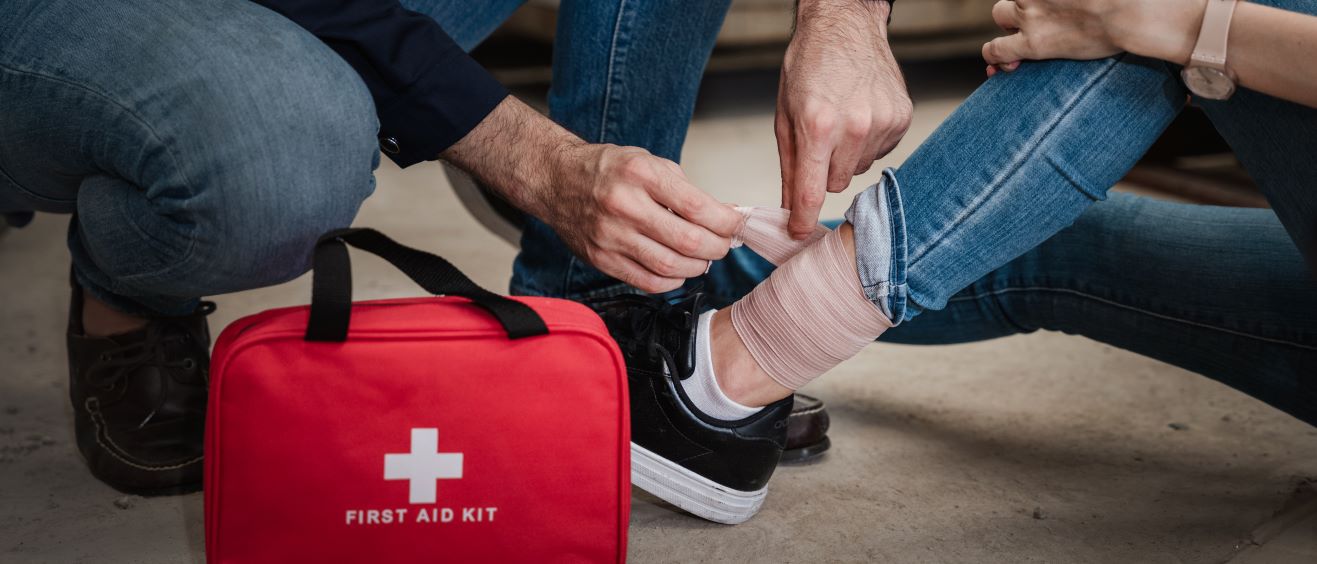
Injury administration. Cuts, burns, strains, cracks, head injuries, eye injuries, and nosebleeds are day-to-day emergency treatment scenarios. Training should show you just how to clean up and dress wounds, use fundamental bandaging and splinting, cool burns properly, and recognise when something that looks "small" in fact requires immediate specialist care.
Environmental and office issues. Belmont first aid courses frequently discuss attacks and hurts, cold and heat direct exposure, chemical exposure, electrical injuries, and crush injuries, especially if the group consists of workers from building, manufacturing, or outside roles. Instructors normally customize emphasis based upon who remains in the area. A participant from a child care centre will hear a lot more regarding choking, high temperatures, and allergic reactions in youngsters. A person from a workshop will spend more time on eye injuries, bleeding, and crush scenarios.
By completion of a common first aid course in Belmont, your focus needs to be bigger than just CPR. You should understand just how different pieces meshed: scene safety and security, communication, practical skills, and your very own legal and moral responsibilities.
How CPR Training in Belmont Actually Feels
People frequently tell me they are anxious concerning the mouth-to-mouth resuscitation component. They picture being put on the spot or failing in front of others. In reality, excellent instructors reduce people into it step by step.
In a typical CPR course Belmont locals attend, the day unfolds something such as this:
The trainer demonstrates the complete DRSABCD sequence once, slowly, with commentary. You see how they look for danger, analyze reaction, put the individual on their back, open up the airway, look for breathing, telephone call emergency solutions, after that start compressions and connect an AED.
Next, you break it into items. You may invest 10 mins just on examining responsiveness, body positioning, and rolling a person into a secure placement. Then you include airway and breathing checks. Just as soon as those really feel much less awkward do you begin compressions.
When compressions begin, expect some genuine manual labor. Quality service providers in Belmont will certainly insist that you practice on the floor, on your knees, since that is just how you would do it in real life. They watch your hand positioning, your upper body language, and your rate. Several usage feedback manikins with lights or signs to reveal whether your deepness and speed suffice. This is where things "click" for many people.
AED training is usually the shock celebrity of the session. Several first time learners anticipate defibrillators to be made complex. Rather, they listen to the device chat them via each action in a clear voice. You learn how to stick the pads, stand clear, and follow motivates, along with what to do if the pads do not stick well or the tool says "no shock suggested".
The instructor will also talk freely about feelings. Doing CPR on a manikin in a class and on a person in actual distress are two very different experiences. Belmont emergency treatment and CPR training courses that appreciate this difference will certainly talk about adrenaline, concern, and the fact that not every resuscitation achieves success, even when done completely. That conversation, while awkward, prepares people extra truthfully than a disinfected, purely technical approach.
A Day Inside a Belmont First Aid Course
When people ask how long a Belmont first aid training day actually is, a realistic response is typically around 6 to 8 get first aid certification courses in my area in touch with hours, often with pre-course online concept. You could start at 9:00 am and end up by 4:00 pm, with breaks and evaluation time consisted of. The precise style varies between companies, yet the rhythm tends to adhere to a similar pattern.
The early morning concentrates on basics. You will go through lawful and ethical duties, infection control, and the big-picture strategy to an emergency situation scene. Instructors discuss permission, duty of care, when you should call three-way no, and just how to shield yourself from blood or body fluid exposure. From there, you relocate directly into the initial functional blocks: main evaluation and CPR.
By late morning, you get on and off the flooring, rotating between manikins and partners, going through circumstance drills. Great fitness instructors will mix brief concept ruptureds with immediate hands-on practice. For instance, you discover the secret indicators of anaphylaxis, after that instantly exercise utilizing a training adrenaline auto-injector on a coworker's upper leg. You discuss bronchial asthma, then work with sugar pills and spacers.
After lunch, programs generally shift to injury and atmosphere. Injuries, hemorrhaging control, burns, cracks, dislocations, and back factors to consider take centre stage. This is where individuals rediscover fundamental bandaging skills they may not have exercised because institution. Belmont emergency treatment training frequently incorporates practical props, such as fake blood, burns simulations, or mock workplace threats taped out on the floor.
The day usually ends with incorporated situations and assessments. You may be appointed a scene with numerous "casualties", an unresponsive individual plus a spectator in shock, or a youngster with a severe allergic reaction. Your team has to interact to use what you have actually found out under time pressure, after that describe your activities to the trainer afterward.
Most individuals are exhausted yet satisfied by the end. It is a great deal of details, however it is anchored in action as opposed to slides. When a Belmont first aid course is well planned, you invest more time doing than listening.
Pre-course List: Getting Ready for Emergency Treatment Learning Belmont
You do not need any kind of special background to participate in an emergency treatment course in Belmont. That said, a little bit of preparation makes the day much more comfy and productive.
Here is a straightforward list to run through the week before your training course:
- Confirm the precise place, vehicle parking or public transportation choices, and start time for your Belmont emergency treatment course, and include them to your calendar. Check dress code suggestions from the supplier, then select comfortable garments you more than happy to stoop and relocate, plus closed-in shoes. Complete any online theory components, quizzes, or reviewing your Belmont first aid training carrier has sent, and write down questions. Pack fundamentals for the day: a beverage bottle, treats, any normal medicine you require, and reviewing glasses if you use them. Consider any kind of physical limitations, such as knee troubles, and allow the instructor understand early so they can change mouth-to-mouth resuscitation technique and assessment positions.
Most problems that thwart a student's day are predictable: showing up late because the place was difficult to discover, battling to stoop on the flooring with tight work clothing, or uncovering there was pre-course e-learning they missed out on. Ten mins of prep work can avoid that.
Choosing a Belmont First Aid Course That Fits You
If you type "emergency treatment course Belmont" or "first aid training in Belmont" into an online search engine, you will see a mix of national training organisations, devoted regional suppliers, and often neighborhood teams or clubs supplying one-off sessions. Price alone is a poor way to pick. A a little more affordable program that leaves you unsure or unprepared is not a bargain.
When contrasting Belmont first aid courses, pay attention to a couple of key factors.
Accreditation and acknowledgment. Look for providers who provide nationally recognised training and provide a valid first aid certificate Belmont employers approve. Many established companies clearly display their RTO status or certification information. If it is not apparent, ask.
Course type and deepness. A basic CPR course Belmont offices could suggest generally competes a couple of hours and concentrates only on resuscitation and AED use. A full emergency treatment and CPR course Belmont residents commonly select for office demands covers far more ground. Then there are innovative or specialist alternatives such as occupational emergency treatment or childcare-focused emergency treatment. Ensure the course you pick matches both legal requirements and functional needs.
Teaching style and class dimension. Smaller sized courses often mean richer interaction and more individual responses, especially on mouth-to-mouth resuscitation technique. Experienced fitness instructors with real scientific or emergency situation backgrounds have a tendency to bring much better stories, more clear judgment, and a more grounded method. When you see "Emergency treatment Pro Belmont" or similar well-known service providers, take a look at reviews that mention the trainer by name and explain exactly how the day really felt.
Flexibility and scheduling. Weekday versus weekend break, morning versus afternoon, combined online plus face-to-face versus complete in-person training: these all issue when you attempt to fit a Belmont first aid course into your life. Also check exactly how rescheduling or cancellations are dealt with. Life happens.
Support for refresher training. Great suppliers make it simple to come back. A CPR correspondence course Belmont residents can attend every year must be uncomplicated to book, with acknowledgment of your previous training and clear advice on what is new or updated in guidelines.
When you evaluate these variables, the "best" first aid pro Belmont can provide you might not be the one with the greatest advertising budget plan. It is the one whose layout, trainer high quality, and assistance associate your details situation.
First Aid Certificates in Belmont: How Long They Last and Exactly How to Maintain Current
A question I hear on virtually every program is "The length of time is this emergency treatment certificate valid?" The response depends on which component of the training you are talking about.
CPR currency. Professional bodies and lots of offices currently suggest mouth-to-mouth resuscitation refresher course training every year. Standards progress over time, yet the more crucial reason is easy skill fade. If you have actually not supplied compressions in a year, your confidence and muscular tissue memory will have decreased. CPR courses Belmont carriers run as brief refresher courses maintain that side sharp.
General emergency treatment. The broader first aid certificate Belmont individuals obtain after a full course is usually treated as present for 3 years in office plan, though you need to check your specific market needs. Also if your employer does not mandate it, I suggest revisiting a full first aid training course every 3 years or two. New research study modifications CPR along with first aid course advised treatments, and devices in offices and public rooms also alters over time.
Workplace responsibilities. Some markets, such as childcare, building and construction, and medical care, have particular guidelines about the degree and recency of first aid and CPR training. If your work falls into among these, lean on your company's health and safety personnel to clarify what you actually require. It is not unusual for people to participate in a training course that is either excessive or a little misaligned with their regulative requirements.
The main takeaway is straightforward: treat first aid and CPR as disposable abilities. A low-stress, well run CPR correspondence course Belmont vast yearly makes even more feeling than trying to remember details from a solitary class you did five years back.
Who Benefits Many From Emergency Treatment and CPR Courses in Belmont
There is a lure to think about emergency treatment training as something for "marked first aiders" just. In truth, the people that wind up utilizing their skills vary widely.
Parents and carers. Around Belmont, I consistently meet moms and dads that reserved an emergency treatment course after a scare: a choking incident, a febrile seizure, or an abrupt allergic reaction. Courses that emphasise kid and infant mouth-to-mouth resuscitation, choking administration, and fever or breathing issues are specifically beneficial here.
Sports trains and volunteers. Local clubs and health clubs create their reasonable share of sprains, concussions, heat ailment, and periodic heart occasions in older gamers or spectators. A strong emergency treatment and CPR course Belmont coaches can attend together typically makes a noticeable distinction on the sidelines.
Workplace safety and security representatives. Every business that takes health and wellness seriously purchases emergency treatment training Belmont large. Yet even in offices, having a few people with present mouth-to-mouth resuscitation and emergency treatment skills changes exactly how with confidence teams can react to fainting, chest discomfort, or falls.
Students and very early occupation workers. Youths entering trades, hospitality, physical fitness, or education gain a specialist side from holding a valid first aid certification in Belmont. It signifies integrity and preparedness to employers, and it provides tools they could need before an ambulance arrives.
Older adults and neighborhood leaders. People in community groups, church committees, or resident associations are often the informal "go to" people when something fails at a gathering. For them, a Belmont first aid course is about community resilience as long as specific skill.
The usual thread is basic: emergency situations seldom wait till the official initial aider gets here. They take place in kitchens, parking lot, club spaces, and playgrounds. The even more individuals across Belmont who have had strong emergency treatment and mouth-to-mouth resuscitation training, the more probable it is that someone nearby can act effectively.
Practical Fact: What First Aid Training Can not Do
Having educated and observed many Belmont first aid courses, I find it crucial to be honest concerning limitations. Training is effective, however it is not magic.
You will certainly not bear in mind every standard flawlessly. Under tension, individuals streamline. That is great. The objective is not perfect book efficiency. It is to prevent dangerous errors, recognise life risks early, and begin the right basic care.
You can not ensure outcomes. Even the best CPR in some cases fails. Strokes, cardiovascular disease, and serious trauma can bewilder any timely feedback. Gauging the value of emergency treatment just by survival rates misses out on quieter however equally important victories: stopping a wound infection with excellent cleaning, keeping a person tranquility and safeguarded from the aspects, or positioning someone safely while help gets on the way.
You are not a substitute for expert treatment. A sound Belmont emergency treatment course will stress the boundary between what a qualified very first aider must and must not try. Giving prescribed medicine outside of clear methods, trying intrusive procedures, or delaying rescue telephone calls are common risks in improperly trained responders.
Acknowledging these facts does not reduce the significance of emergency treatment. It premises it. Your role is to link the moment space with secure, reliable care and accurate info, not to become an amateur clinician.
Making one of the most of Your Belmont First Aid Course
By the moment you walk into your chosen emergency treatment course in Belmont, you have actually currently done the tough component: you reserved it. The rest has to do with pressing as much value as you can from the day.
Three practices assist:
Stay curious. Ask trainers "why" as opposed to just "how". Why is this melt cooling time advised? Why do guidelines now favour this depth of compression? When you recognize the reasoning, you bear in mind the technique extra reliably.
Treat situations as genuine. When you stoop close to the manikin, visualize it is your coworker or member of the family. When you wrap a pretend injury, photo the situation that caused it. That psychological rehearsal makes it much easier to advance with confidence when you encounter a real emergency.
Commit to refreshers. Before you even receive your first aid certificate Belmont carriers problem at the end of the course, strategy when you will certainly next take another look at CPR or complete emergency treatment training. Include a tip to your schedule at 11 or one year out. Skills that are not practiced slip.
If you come close to emergency treatment courses in Belmont with that said way of thinking, the impact of a solitary day extends throughout years and throughout the lives of the people around you. You might never know all the problems you assist protect against or the recoveries you assist smooth, however you will certainly know that when something fails, you are not standing there powerless. You belong to the solution.